Summer’s Here! So are the Rattlesnakes!
We didn’t even hear a rattle.
When summer comes so do the reptiles. They exit brumation - a dormant state similar to hibernation - and get their metabolism going in the warm sun. The vast, vast majority of snakes that you will encounter are harmless. But not all of them. And while it is tremendously unlikely that you will run into a venomous snake, taking upfront precautions will go a long way to mitigate potential danger.
The best way to protect you and your dogs from rattlesnakes, cottonmouths, and coral snakes is prevention. After our own dog Goblin was bit on the tongue by a rattlesnake in our front yard (he survived), we took our dogs to Snake Avoidance Training provided by Winter Kennels. Winter Kennels uses live, de-venomated snakes along with positive punishment to create a mental link between snakes and danger. It’s not an emotionally fun experience for your dogs or you, but it is important. Not only will your dog be reluctant to engage with a snake, their body language and behavior when one is nearby can act as an early warning to danger.
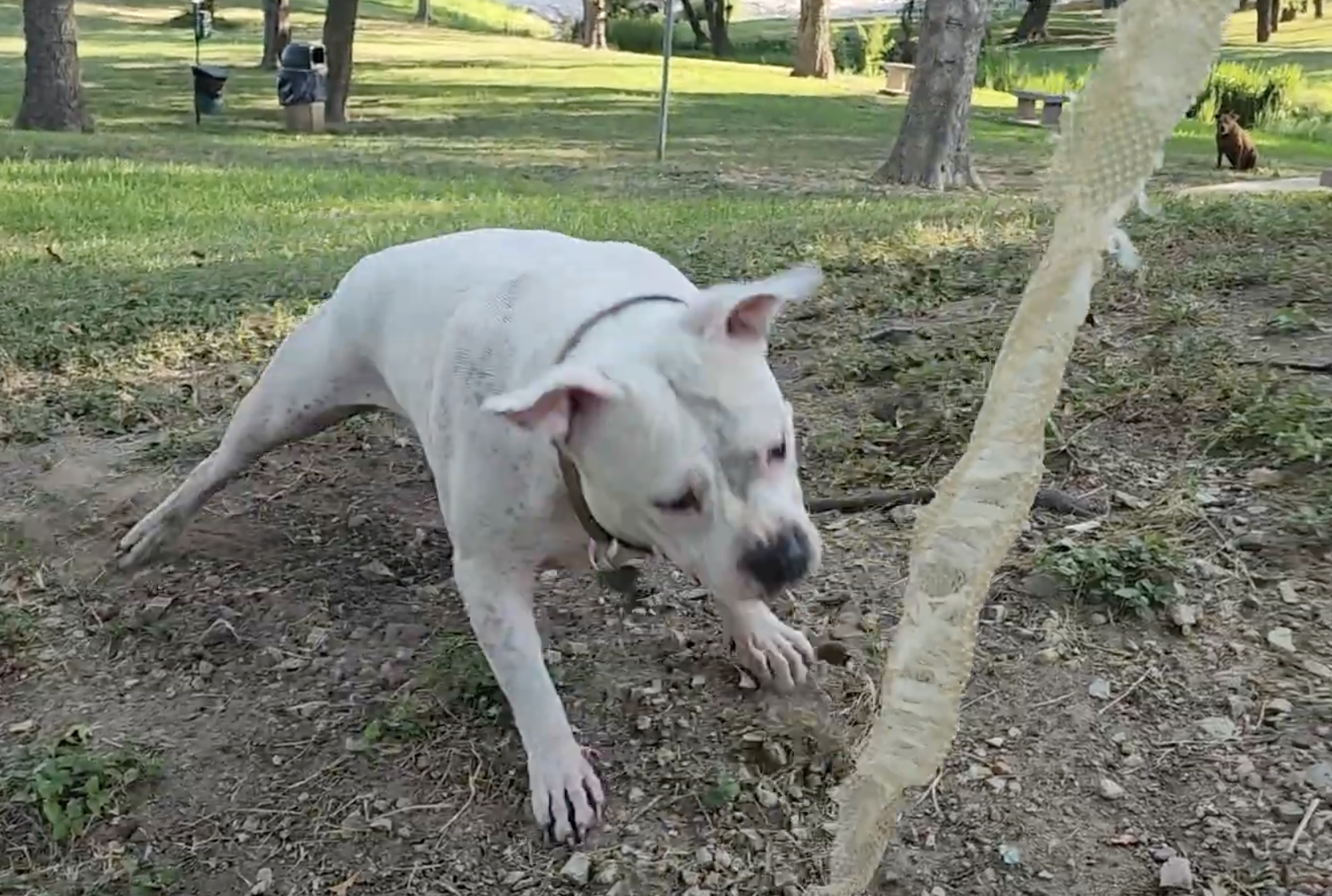
Our dog Hime has a high prey drive and is very interested in snakes
Watch Hime’s Avoidance Training
In addition to avoidance training, we recommend rattlesnake vaccination. While the vaccine isn’t a failsafe against envenomation, it does buy time and protection for you to get to the vet in case of an encounter.
And speaking of encounters, if you are unfortunate enough to have such an experience:
Don’t panic. Remain calm and focused. You can panic later.
Get to the nearest emergence vet.
If you have a preferred vet, ask them ahead of time if they keep anti-venom in stock.
Last year our dog Goblin was bit on the tongue by a rattlesnake in our front yard. He survived but his tongue was never the same again. Below is a video of the aftermath and recovery. FULL WARNING: it is a graphic video and very hard to watch.